
Smart door lock vs. traditional lock: compare cost, security features, remote access, and key control to choose the best lock for your home.
Smart Energy Optimization: How Home Automation Can Cut Costs in 2026
Key takeaways
- Smart home energy is the use of connected devices and automation to monitor, adjust, and optimize how your home uses energy.
- Energy-smart devices make small changes that add up to big savings.
- Devices include smart bulbs, smart thermostats, motion sensors, and more.
- Comfort IQ on the Vivint Smart Thermostat can save up to $300 annually* in heating and cooling costs.
- Benefits of smart home energy include lower electricity bills, a more comprehensive understanding of your energy use, automation, and faster response to high-usage events.
Smart home energy is reshaping how homeowners manage power consumption, offering a simpler, more efficient way to control daily energy use. In 2026, rising electricity costs and growing environmental concerns are pushing more people to adopt smart home technology—not just for convenience, but for better energy efficiency.
Smart home energy refers to the use of connected devices and automation to monitor, adjust, and optimize how energy is used in your home. These tools have evolved from standalone gadgets to fully integrated systems that communicate across your home to reduce waste and increase comfort. Whether it's helping homeowners adjust their thermostats based on occupancy or scheduling their appliances to run during off-peak hours, home automation is helping more households use less energy without compromising lifestyle.
From smart lighting to learning thermostats, you now have the tools to make energy-smart decisions automatically, and those changes can potentially add up to real savings.
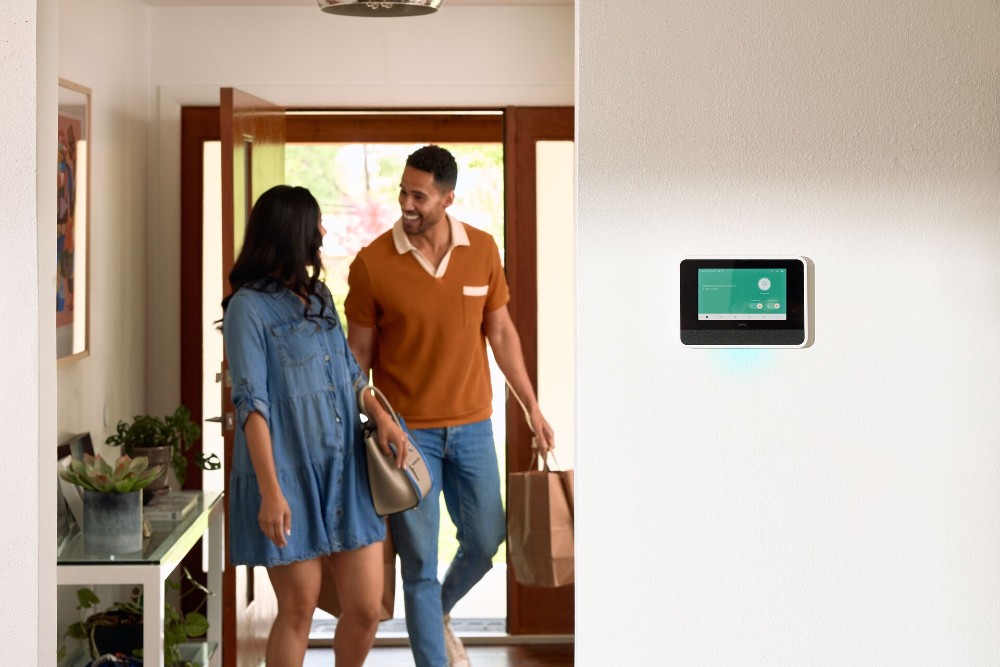
How smart homes help you use less energy
Smart home devices improve how energy is used throughout your home. They help reduce unnecessary consumption through automation, monitoring, and intelligent control. Here's how:
- Smart lighting turns off automatically. Lights can shut off in unoccupied rooms or adjust brightness based on the time of day to reduce energy use.
- Smart thermostats are adjustable from anywhere. With a simple tap in your app, raise or lower the temperature on your smart thermostat from anywhere.
- Motion sensors detect activity. When no one is in a room, motion sensors can trigger lights or other devices to power down, cutting back on energy consumption.
- Voice commands offer instant control. With systems like Google Assistant, you can easily turn off devices or change settings without lifting a finger.
- Smart home devices connect over Wi-Fi. This enables centralized control and automation, helping you optimize energy usage across multiple systems.
Each of these smart features works together to create a more energy-efficient home that saves money and supports a more sustainable lifestyle.
Related article
How to Make a Smart Home
The benefits of real-time monitoring and automation
Tracking your energy use as it happens empowers you to make smarter choices, and automation ensures those choices stick. Here are some of the key benefits of using real-time monitoring tools in your home:
- Lowering your electricity bill. By seeing exactly how much power you're using and when, it's easier to spot areas where you can cut back.
- A better understanding of your home's energy use. A home energy monitor or smart meter helps you visualize energy patterns and identify waste.
- Faster response to high-usage events. Real-time alerts can notify you if something unusual is using more power than expected.
- Automation. You can set rules for when devices turn on or off, helping you optimize usage without constant manual control.
- Peace of mind. With more visibility and control, you can feel more confident in your ability to manage energy bills and run a more efficient home.
By combining real-time insights with automation, smart home systems give you the tools to control your home energy without hassle.
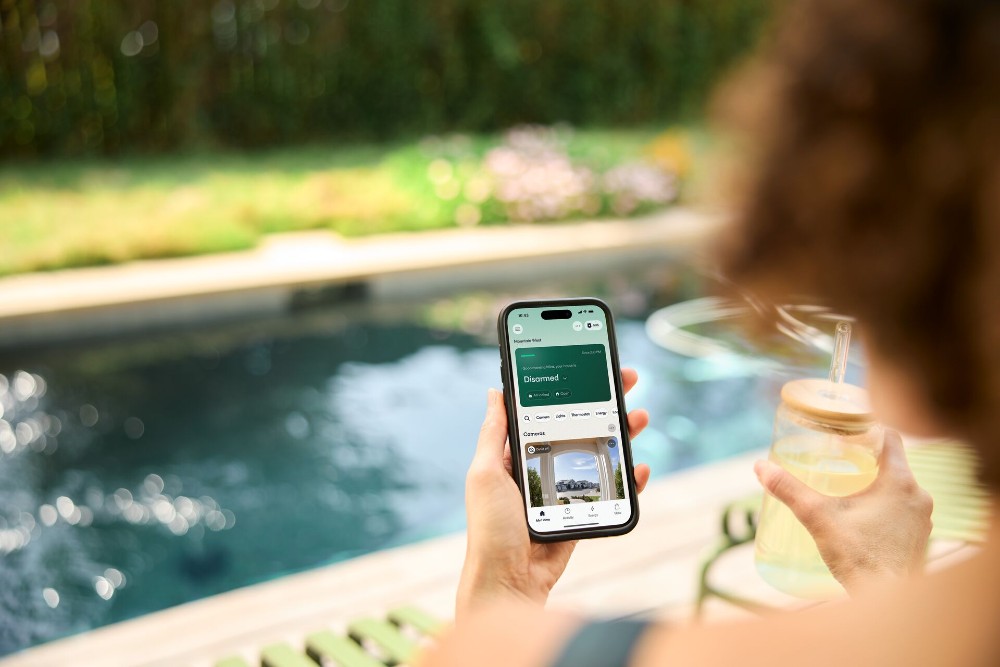
Devices that maximize energy savings
The right smart devices make a big difference. From lighting to HVAC systems, today's smart home technology gives you more control over how and when energy is used. These tools improve comfort and convenience while helping you use less energy and lower your utility bills over time.
Here are some of the most effective devices for saving energy in a smart home setup:
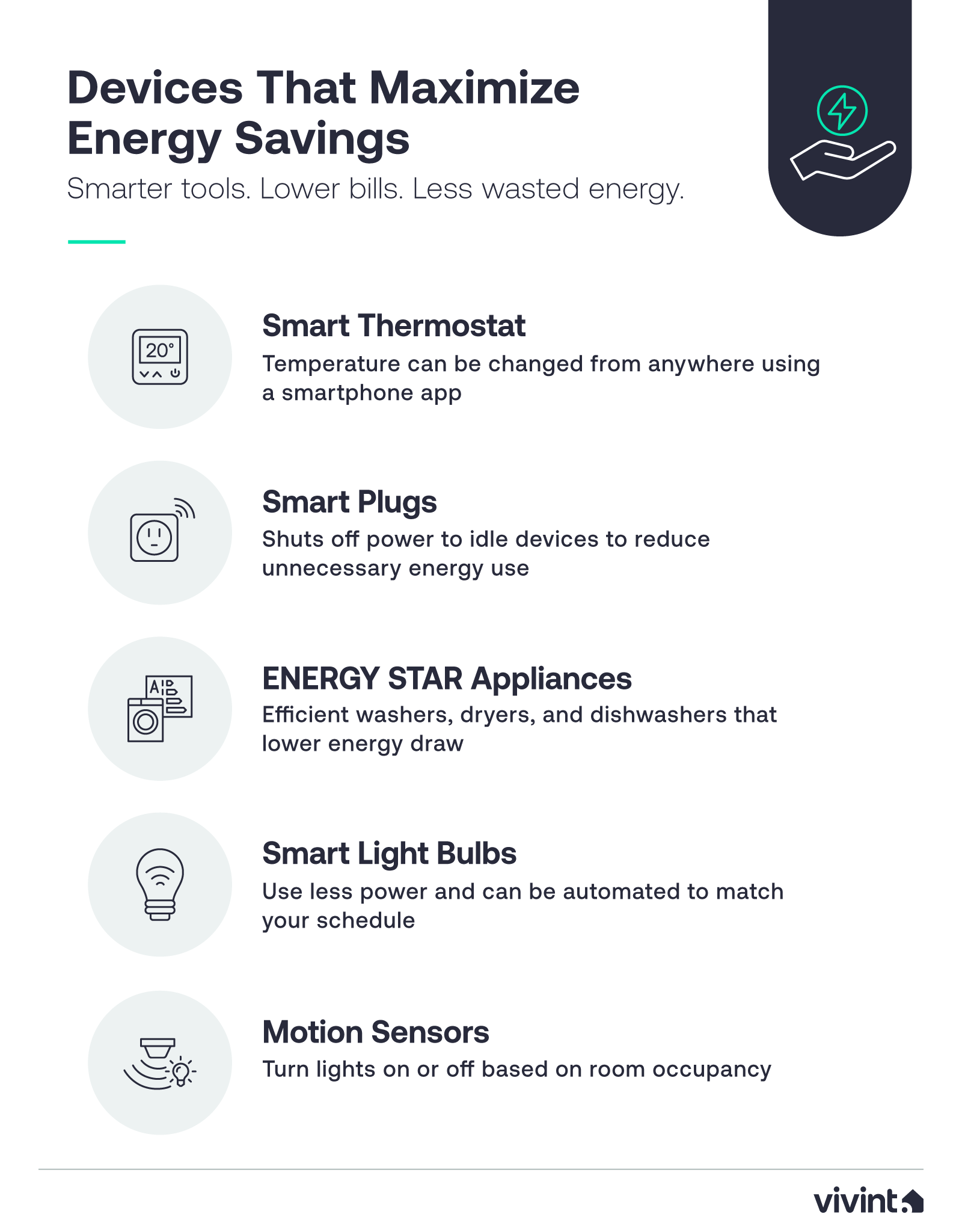
Smart thermostat
A smart thermostat helps lower energy costs by allowing you to adjust heating and air conditioning based on your schedule, occupancy, and even real-time weather conditions—from anywhere. Simply open up your app and raise or lower the temperature with a simple tap. Over time, this may lead to measurable energy savings.
The Vivint Smart Thermostat uses Comfort IQ to help customers save up to $300 a year* in energy costs. integrates with your broader Vivint smart home system, allowing you to adjust temperature settings remotely or create routines that align with your daily habits.
Smart plugs
Smart plugs help manage energy use by cutting power to devices that are left idle or stuck in standby mode. Whether it's a coffee maker, game console, or floor lamp, these plugs let you schedule shutoffs, control devices remotely, or automate usage to reduce wasted energy.
Vivint smart plugs and outlets offer reliable, connected control that fits seamlessly into your home's energy-saving strategy.
ENERGY STAR appliances
ENERGY STAR–rated dishwashers, washing machines, and dryers are built to use less energy and water while maintaining strong performance. You can also program many smart appliances to run during off-peak hours and monitor them via an app, allowing for smarter operation and lower energy bills.
If you're looking to upgrade, energy-saving smart home devices like these are a great investment in both efficiency and long-term savings.
Smart light bulbs
Swapping out traditional bulbs for smart light bulbs is a quick way to reduce energy use from lighting. These bulbs can be dimmed, scheduled, or turned on and off remotely, adapting to your routines to avoid unnecessary energy use.
Smart light bulbs work within your smart home system and make it easier to control lighting throughout the day—automatically or with the use of an app.
Motion sensors
Motion sensors help cut energy waste by turning lights on when someone enters a room and off when the room is empty. They're especially useful in high-traffic areas like entryways, hallways, and shared spaces where lights are often left on.
Motion sensors and detectors integrate easily with smart lighting and smart home systems, helping you reduce unnecessary energy use without giving it a second thought.
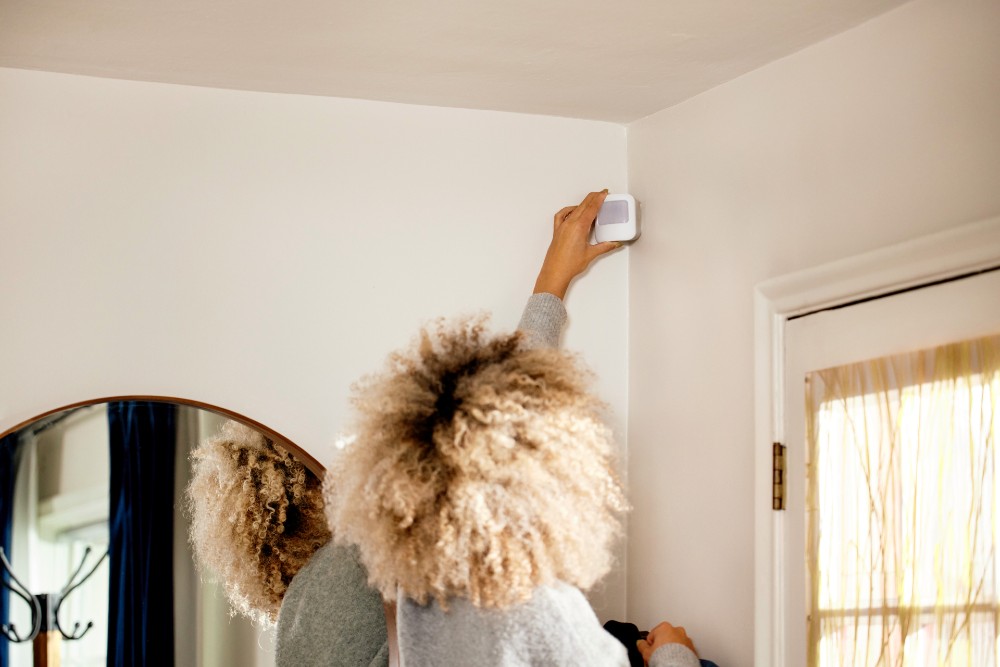
Home energy management systems: centralized control for smarter efficiency
A home energy management system (HEMS) gives you the ability to monitor, analyze, and optimize your home energy in one place. Acting as the central brain of your smart home energy setup, a HEMS connects to your smart home devices—like thermostats, lighting, appliances, and plugs—to track real-time energy usage and automatically adjust settings for greater efficiency.
These systems go beyond basic automation by offering meaningful insights into your energy habits. By identifying patterns in energy usage and spotting areas where energy is wasted, a HEMS helps you make informed changes that lead to long-term energy savings. Adjustments can be automated based on time of day, occupancy, or even utility rates, reducing energy consumption without constant oversight.
HEMS platforms are also built for compatibility. Whether you're integrating with smart meters, solar panels, or energy storage systems, these tools provide the functionality you need to create a more eco-conscious, cost-effective home.
Related article
Beginner's Guide to Home Automation
Why Vivint is a smart choice for smarter energy
If you're looking for a system that integrates smart home energy, automation, and security into one platform, Vivint offers a proven solution. With integration across smart home devices, Vivint helps you optimize how your home runs, saving energy while simplifying everyday routines.
Beyond energy savings, Vivint delivers the added benefits of professional support, a secure home, and peace of mind. As a provider that blends intelligent energy use with whole-home protection and convenience, Vivint is a smart choice for anyone looking to get more from their home automation system.
Ready to see how Vivint can help you optimize your smart home? Give us a call at 800.646.1469 or explore our smart home systems and sign up today.
Smart home energy FAQs
Find answers to some commonly asked questions about energy savings and smart homes below.
How can a smart home help me save energy?
Smart home devices like thermostats, lighting systems, and smart plugs automate energy management by adjusting settings based on your schedule, occupancy, and preferences, helping reduce unnecessary energy consumption throughout your home.
How can Vivint help me save money on energy bills?
The Vivint Smart Thermostat may help you save up to $300 annually* on your energy bill thanks to Comfort IQ. The Smart Thermostat works with your broader Vivint system to auto-adjust based on your preferences and occupancy, helping you maintain a comfortable temperature while you're home and save even more while you're away.
How does a home energy management system work?
A home energy management system (HEMS) connects to energy-using devices throughout your home so you can monitor and mange their energy use in real time. A HEMS gathers data from your thermostat, lighting, appliances, and more to give insight into how these devices are using energy, sends you alerts for abnormal activity, and adjusts settings automatically based on your schedule to help you save money.
*Estimated savings only, not guaranteed. Actual savings vary. Learn more.
Get a free quote today.
A Vivint Smart Home Pro will contact you within 24 hours. Or skip the form and call now: 844.481.8630.
Everything works together
Combine products
for a safer home
You may also like:
Smart Home
Smart Door Lock vs. Traditional: Which Offers Better Security for Your Home?
Sep. 11, 2026

Smart Home
Do Security Cameras Work With Smart Home Systems?
Modern security cameras integrate seamlessly with smart home devices to form one ecosystem of whole-home control and protection.
Sep. 09, 2026

Smart Home
What Is a Smart Home?
A smart home connects lighting, locks, thermostats, and security into one app-controlled system. See the devices, setup, and costs for 2026.
Jul. 20, 2026
Related content
-
The Best Energy Monitoring Tools in 2026: How To Lower Your Home’s...
Cut energy costs in 2026 with the best energy monitoring tools. Track real-time usage, reduce waste, and boost home efficiency.
-
Home Energy Management System Explained: Smart Savings Made Easy
Understand how a home energy management system works and how Vivint's smart tools help optimize energy use.
-
How To Slash Your Energy Bills With Smart Home Tech
Cut energy bills with smart home tech. Discover real-time control, automation, and devices that boost efficiency and reduce waste.


