
The Matter smart home standard transforms how devices connect and automate your home.
Smart Lighting & Security: How Do Automated Lighting Schedules Deter Burglars?
Key benefits of smart lighting for home security:
- Automated lighting makes it look like someone’s home, even when you’re away
- Lights can respond to motion, lighting up your property whenever someone gets too close
- LED bulbs and smart schedules reduce energy use to save you money
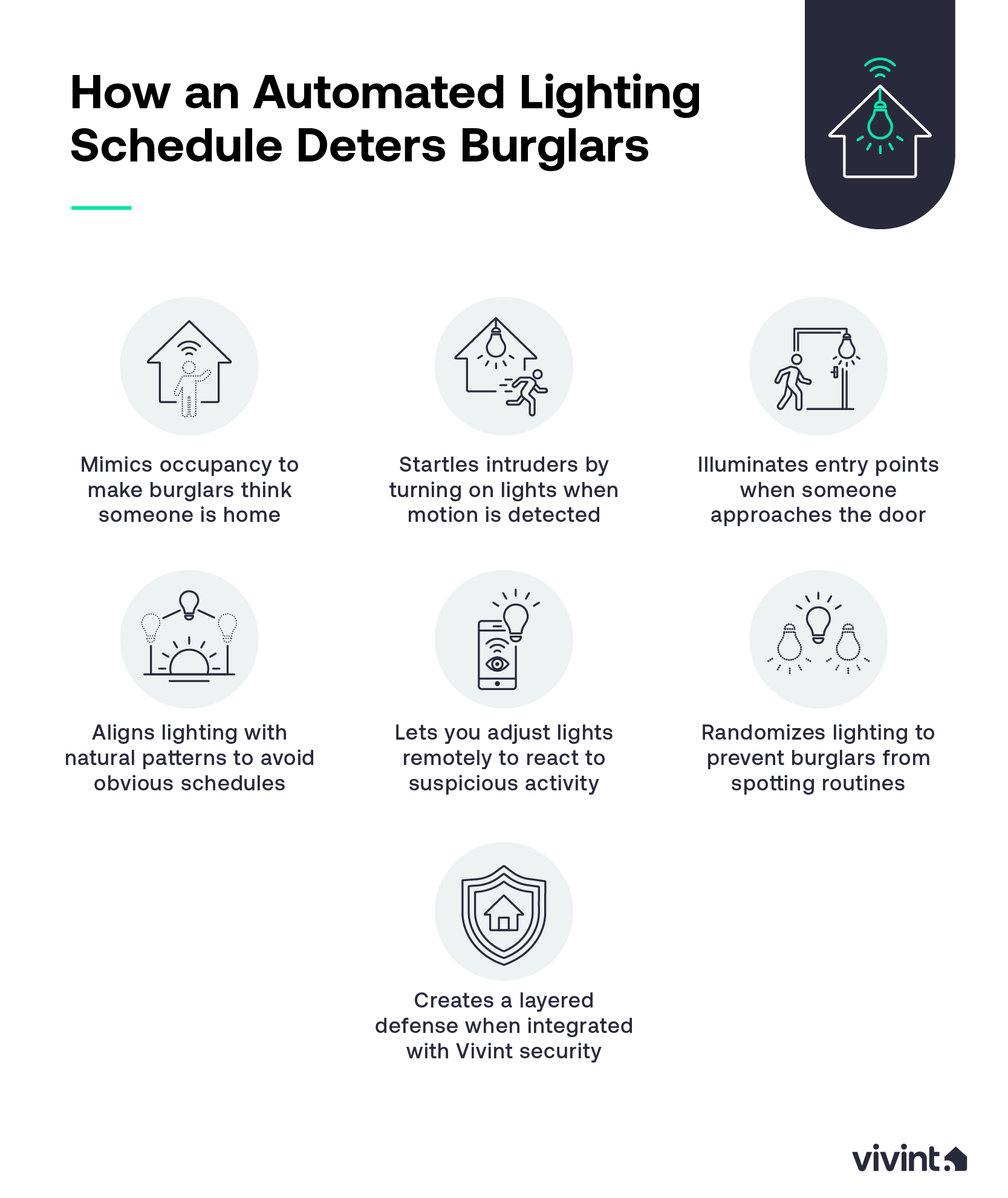
An automated lighting schedule helps homeowners protect their property by creating the appearance of activity, even when no one is home.
Using smart lights as a burglar deterrent is effective because unpredictable lighting patterns make it harder for someone to tell whether a home is occupied. Smart lighting can significantly increase you and your family’s safety by simulating occupancy, especially when paired with randomization modes and varied timing.
This guide breaks down how automated lighting works, the security benefits, setup steps, best practices, and how Vivint integrates lighting into your broader smart home.
What is automated lighting for home security?
Automated lighting uses schedules, timers, motion sensors, smart camera feeds, or smart home triggers to decide when to turn your lights on and off. It can also be used to make your home look occupied when you are out of town and to deter potential intruders. This all happens without you having to lift a finger.
How does automated lighting increases home security?
Smart lighting increases your home’s security by making it look lived-in through lighting automation.
Randomized schedules outperform leaving lights on 24/7 because burglars recognize predictable patterns, while varied timing creates uncertainty. Features like motion-triggered outdoor lights, sunset-based routines, and schedules that activate at specific times align with natural daily activity.
Vivint’s connected ecosystem of home security products provides extra protection. Compatible smart lights can turn on when motion sensors activate outside, illuminate entry points when a doorbell camera detects someone at your porch, or integrate with indoor routines for a consistent lived-in look.
Related article
Smart Plug Basics
What are the benefits of using an automated lighting schedule?
Automated lighting offers more than home security—it adds convenience, comfort, and energy efficiency. Beyond deterring burglars, lighting schedules make daily routines smoother, from morning wake-ups to nighttime wind-downs.
Common benefits include:
- Convenience. Set lighting schedules on a timer for ambiance or a preset brightness that matches different times of day.
- Safety. Automatic sunset lighting or pathway illumination helps prevent trips and improves visibility.
- Energy efficiency. LED lights, dim settings, and well-timed routines reduce unnecessary energy consumption.
- Peace of mind. Lighting that adjusts itself offers reassurance whether you’re home or traveling.
Integrating lights with motion sensors and cameras
Connecting smart lights to your Vivint system strengthens home security by triggering lighting based on real-world activity. When paired with motion sensors, your lights can turn on automatically when movement is detected near entry points, making it harder for burglars to approach unnoticed.
Linking lights to doorbell or outdoor camera events provides an added layer of visibility—your porch, walkway, or driveway lights can brighten the moment someone is detected near your home.
These integrations improve response time, reduce dark spots, and help illuminate key areas without you needing to manually control switches. They bring lighting automation and smart home security together into a single, hands-free system.
Setting vacation mode and randomization
Vacation mode creates unpredictable lighting schedules that simulate natural activity and make your home look occupied. Random schedules are more effective than leaving lights on continuously because burglars often recognize fixed lighting routines.
With Vivint Smart Lighting, homeowners can stagger lighting times, vary which rooms illuminate, and adjust brightness levels to mimic real movement throughout the house.
Remote control through the app lets you update these random schedules while traveling, adding an extra layer of flexibility. When combined with security camera alerts or motion-triggered events, vacation mode becomes a powerful smart light burglar deterrent.
How do I set up an automated lighting schedule for home security?
Follow these steps to create an effective automated lighting schedule to keep your home protected:
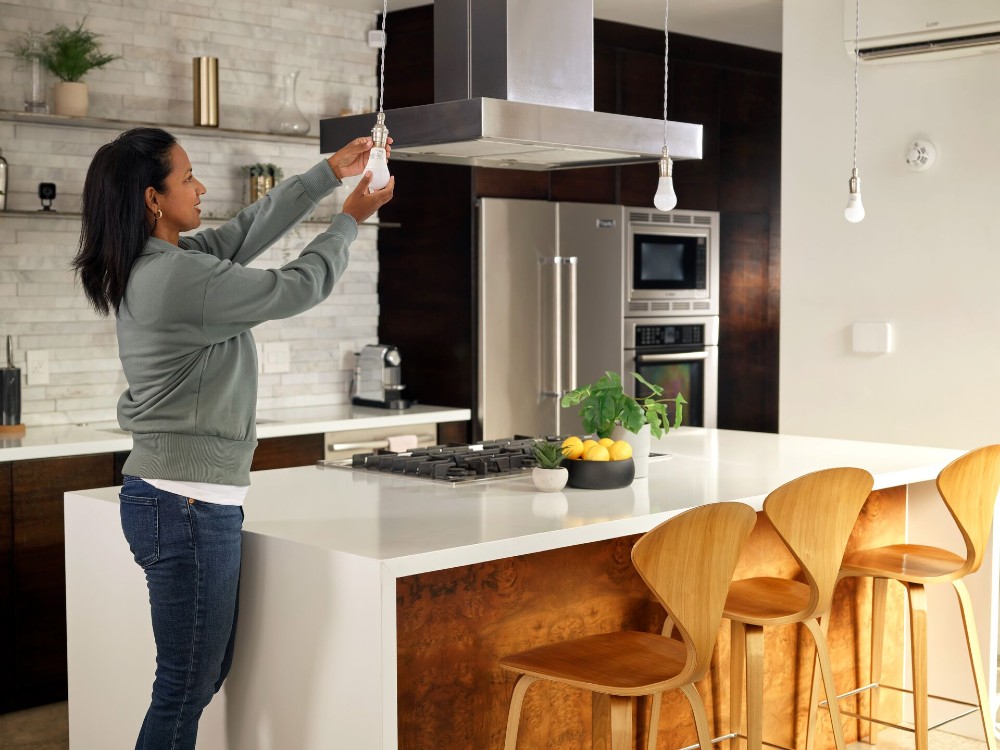
- Choose compatible smart bulbs or smart plugs. Select LED bulbs that work with your home security system.
- Connect to a central hub. Link your smart lights to the central hub that you use to control your smart products. This may be an app like the Vivint app, or a device like the Vivint Smart Hub.
- Set schedules in the app or on the hub based on times of day.
- Integrate with motion sensors and other compatible smart devices. This will enable your security lights to respond to activity around your home.
Related article
Where To Place Home Security Lights
How to use different smart lighting schedules
| Feature | Timer-Based Lighting | Motion-Activated Lighting | App-Controlled Lighting |
|---|---|---|---|
| How It Works | Turns on/off at programmed times | Activates when movement is detected | Is controlled remotely though an app |
| Best For | Daily routines | Doors and windows, driveways, porches | Real-time adjustments from anywhere |
| Pros | Simple setup with consistent, reliable schedule | Instant response to activity | Full control and flexibility from anywhere |
| Cons | Preditable and may signal that no one is home | Requires integration with motion sensors | Requires Wi-Fi and app access |
Tips for using smart lights as a security tool
Smart lighting works best when paired with thoughtful placement and realistic timing. When used strategically, lighting automation supports stronger home security without increasing the effort needed on your end.
Indoor lighting best practices
Interior lights help create convincing occupancy patterns when used correctly. Focus on rotating illumination between the rooms someone would typically use in the evening.
Here are a few best practices:
- Vary room usage. Rotate which lights activate to avoid repetitive behavior.
- Avoid leaving one lamp on all day. Static lighting is easy for burglars to recognize.
- Use a smart plug. Add lamps to your automated lighting schedule for more flexible placement.
Outdoor lighting best practices
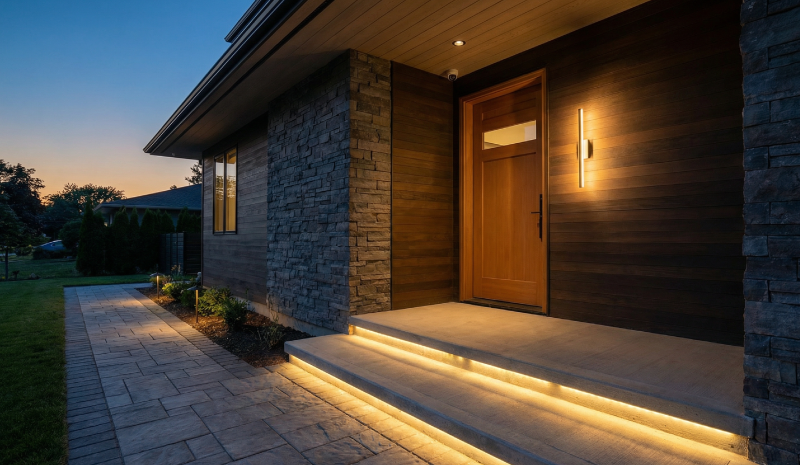
Outdoor lighting strengthens home security by illuminating entry points and creating visibility around your property.
Smart outdoor lights can activate automatically at sunset when natural light decreases, brighten when motion is detected, or link to camera events for a more responsive setup.
Here are a few best practices:
- Light key entry areas. Focus on porches, garages, side doors, and walkways.
- Use motion detection. Motion-triggered lighting reacts instantly to activity.
- Choose efficient LED floodlights. These provide wide coverage with greater energy efficiency.
Best practices for using smart lighting for home security
- Vary your lighting schedule if you are traveling. Change the times your lighting activates each day to appear more natural.
- Use smart lighting outdoors and indoors. Indoor lighting makes it seem like someone is home, and outdoor lighting wards off would-be intruders.
- Pair smart lighting with security products. If your cameras see someone lingering on your property, smart lighting can turn on to ward them away.
- Check compatibility. Make sure the smart bulbs you purchase work with your existing smart home and home security system.
Checklist: 5 ways to use smart lights for home security
You shouldn’t have to stress about keeping your home safe. Here are five simple ways homeowners can use lighting automation to reinforce home security:
- Remote on and off control. Manage lights from anywhere for quick adjustments.
- Timed schedules. Create predictable routines that mirror daily activity.
- Motion-activated lighting. Trigger lights when someone approaches your home.
- Camera integration. Link lights to doorbell or outdoor camera events for instant visibility.
- Geofencing triggers. Automatically turn lights on or off based on your location.
Related article
What Is a Smart Home?
How smart lighting works with your Vivint home security system
Smart lighting integrates directly with your Vivinthome security system to give you unified control and stronger protection. When you set up compatible smart bulbs in the Vivint app, you can sync your lights to respond to motion sensors, cameras, and alarms. This way, your security system responds much more cohesively to activity inside or outside your home.
When combined with other Vivint equipment, such as smart plugs, lighting automation features, and camera alerts, your smart lighting system delivers much greater visibility and peace of mind at any time of day.
Strengthen your home’s security with smarter lighting
Automated lighting supports better security, smoother routines, and more energy-efficient habits. When paired with randomization features, motion triggers, and camera integrations, your lighting becomes a powerful part of your home protection strategy.
Compatible smart lighting integrates with Vivint home security systems so homeowners can manage schedules, create realistic occupancy patterns, and illuminate key areas automatically.
Ready to learn more about Vivint and how adding smart lighting to your home security system can enhance your home? Visit our website or give us a call at 855.822.1220 today to get started.
FAQs for automated lighting schedules
These common questions help homeowners understand how automated lighting works and how to customize lighting schedules for stronger security and everyday convenience.
How does automated lighting deter burglars?
Automated lighting deters burglars by making your home look occupied while you’re away. Unpredictable lighting patterns create uncertainty, making it harder for intruders to tell if anyone is home. Motion-activated lights also startle lurkers and draw attention to them.
Can smart assistants set a schedule for lights?
Yes. smart assistants let you set routines and schedules that turn lights on or off at specific times or when certain conditions occur.
You can manage these routines directly through the app app or by pairing your smart assistant—like Google—with your Vivint system for voice commands and seamless smart home control.
What is an automated lighting system?
An automated lighting system uses schedules, timers, sensors, or smart home triggers to control your lights, without the hassle of manual switching.
These systems adjust lighting based on preset times, motion events, or other cues to improve convenience, lighting automation, and home security.
How does home automation work?
Home automation connects devices—like lights, sensors, and cameras—to a centralized control system.
These devices communicate through Wi-Fi, Bluetooth, or a dedicated hub so homeowners can automate routines, create triggers, and manage everything from a single app.
What are the 4 C's of lighting?
The four C’s are color, comfort, control, and cost. Smart lighting helps homeowners adjust color temperature, improve comfort with dimmable settings, use automated control options, and manage cost through more energy-efficient lighting solutions.
Why are my LED lights turning off?
LED lights can turn off unexpectedly due to overheating, loose connections, faulty wiring, or incompatible dimmers.
If you have dim lights or your lights continue shutting off, consider checking the fixture, updating the dimmer, or contacting a Vivint professional to inspect the electrical setup.
Get a free quote today.
A Vivint Smart Home Pro will contact you within 24 hours. Or skip the form and call now: 844.481.8630.
Everything works together
Combine products
for a safer home
You may also like:
Smart Home
What Is the Matter Smart Home Standard?
Apr. 09, 2026

Smart Home
How Does a Smart Water Leak Sensor Prevent Flood Damage at Home?
Protect your home and prevent costly damage with a smart water leak sensor. See how water leaks sensors work, and learn about different sensor types.
Apr. 08, 2026

Smart Home
What Is a Smart Home?
Learn what a smart system is, including how it works, its advantages, and what devices can be part of it.
Apr. 01, 2026
Related content
-
Guide to Outdoor Security Lighting
Learn all about outdoor security lighting, including outdoor light options and features.
-
Guide to Smart Home Lighting and Home Security Automation
Learn about smart lighting and home security automation, including what they are and how they can benefit you.
-
Home Security While on Vacation: Keeping Your Residence Safe
Protect your home with smart strategies and devices designed for strong home security while on vacation, from lighting schedules to monitoring.


