
Find out the cost of smart home automation in 2026, including devices, installation, and which options make sense for your home.
Best Smart Thermostats of 2026: A Complete Buying Guide
A smart thermostat is one of the most impactful upgrades you can make to your home’s comfort and efficiency. Unlike traditional thermostats, smart models connect to Wi-Fi and offer intelligent features like remote home temperature control, scheduling, and automation. Whether you’re aiming to save on energy bills or simplify your routine, a smart thermostat is a powerful tool for a more convenient and efficient home.
Leading brands like Vivint’s Smart Thermostat and Nest Learning Thermostat offer a range of devices that suit different needs and budgets. Many are compatible with major smart home platforms—including Google Assistant, Apple HomeKit, SmartThings, and Siri—making it easy to integrate with your existing ecosystem. With benefits like energy savings, voice control, and real-time remote access, smart thermostats are a smart investment in both comfort and sustainability.
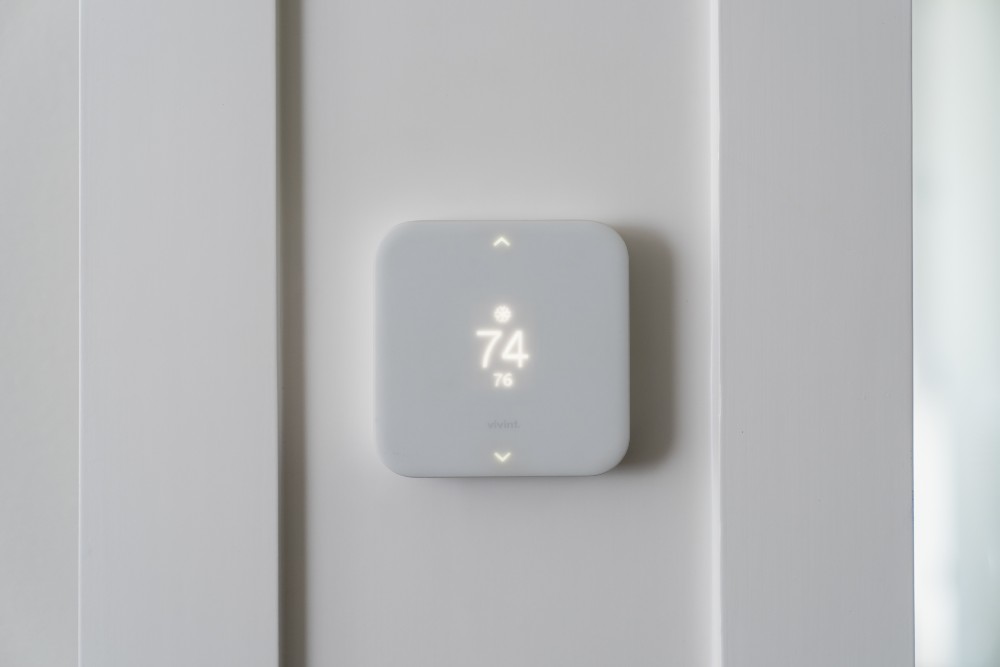
What is a smart thermostat?
A smart thermostat is a Wi-Fi–enabled device that gives you more control over your home’s heating and cooling systems. Unlike standard thermostats, it allows you to adjust temperature settings remotely from a smartphone, tablet, or smart speaker. Most smart thermostats are designed to work with your existing HVAC system, automatically managing it to maintain comfort and reduce unnecessary energy use.
There are two main types of smart thermostats: programmable and learning. Programmable thermostats let you set heating and cooling schedules based on your daily routine. Learning thermostats, like the Nest Learning Thermostat, go a step further by observing your habits over time and adjusting settings automatically to match your preferences.
Many models also include advanced energy-efficient features. Geofencing uses your phone’s location to determine when you’re home or away and adjusts temperatures accordingly. Occupancy detection relies on sensors to recognize movement and adjust heating or cooling in real time. Combined with automation capabilities, these features help save energy without sacrificing comfort.
With air conditioning and heating making up over 50% of your monthly electricity bill, it’s imperative to find a system that helps you optimize your usage.

What makes a thermostat the best?
Choosing the right Wi-Fi thermostat means understanding the features that make a real difference in comfort, energy use, and convenience. While most models offer standard scheduling and remote access, the best smart thermostats go further—offering smarter integrations, better control, and energy-saving technology.
Here are the top features to consider:
- Energy savings and efficiency. Smart thermostats help reduce energy bills by automatically adjusting temperature settings based on your routine, occupancy, or preferences. Some models can even track energy usage trends, helping you make informed decisions to save money and energy.
- Voice control and integration. Look for compatibility with major smart home platforms like Google Home and Apple Home. With voice control, you can make quick adjustments hands-free, whether you’re cooking, working, or relaxing.
- Room sensors & temperature settings. Some devices allow thermostats to use temperature sensors in multiple rooms, not just where the thermostat is installed. This ensures consistent comfort throughout your home and prevents hot or cold spots.
- Remote control & app functionality. A user-friendly app lets you adjust the temperature, change modes, and check energy usage from anywhere. Whether you’re at work or on vacation, you stay in control of your home climate.
- Touchscreen vs. button controls. Some thermostats feature sleek, full-color touchscreens for intuitive control, while others stick to traditional buttons. Touchscreens tend to offer better visibility and easier navigation, especially in low light.
- C-wire requirement & installation. Many smart thermostats require a common wire (C-wire) for consistent power. If your system doesn’t have one, you may need an adapter or professional installation. However, some models—like certain Emerson or Ecobee versions—are designed to work without a C-wire, making them more DIY-friendly.
Focusing on these key features ensures you’ll choose a smart thermostat that fits your home, your lifestyle, and your energy goals.
Related article
Are Smart Thermostats Worth It?
Top smart thermostats of 2026
With energy efficiency, connectivity, and convenience top of mind, smart thermostats continue to evolve to meet the needs of modern homeowners. The best models of 2025 offer a range of features—from advanced sensors and sleek touchscreens to voice control and seamless smart home integration. Whether you want full automation or a simple upgrade, here are the best thermostats to take your smart home to the next level.
Vivint Smart Thermostat
The Vivint thermostat is built specifically for homeowners looking for full smart home integration. Designed to work within the Vivint Smart Home ecosystem, it allows for intelligent automation and remote control via theVivint app.
- Auto-adjust temperature. Adjusts temperature based on occupancy, sensor input, and user routines.
- Remote control. Adjust settings from anywhere using the Vivint app.
- Energy bill savings. Potentially save on your monthly energy bill.
- Voice assistant compatibility. Works with Google Assistant.
- HVAC protection. Shuts off your system automatically during emergencies like fires.
- Professional installation. Ensures reliable setup and system compatibility.
Nest Learning Thermostat
Google’s latest Nest thermostat brings a refined design and smarter learning capabilities. It’s a solid choice for users already in the Google Nest ecosystem.
- Modern design. Slimmer body and a larger screen.
- AI-powered learning. Offers optimal energy use.
- Improved learning. Adapts faster to user routines to reduce energy use.
- Room sensors. Monitor temperature in different rooms for balanced comfort.
- Matter support. Enhances compatibility across smart home platforms.
- Smart integrations. Your Nest thermostat also integrates with your Vivint smart home system, so you can control your entire smart home from one platform.
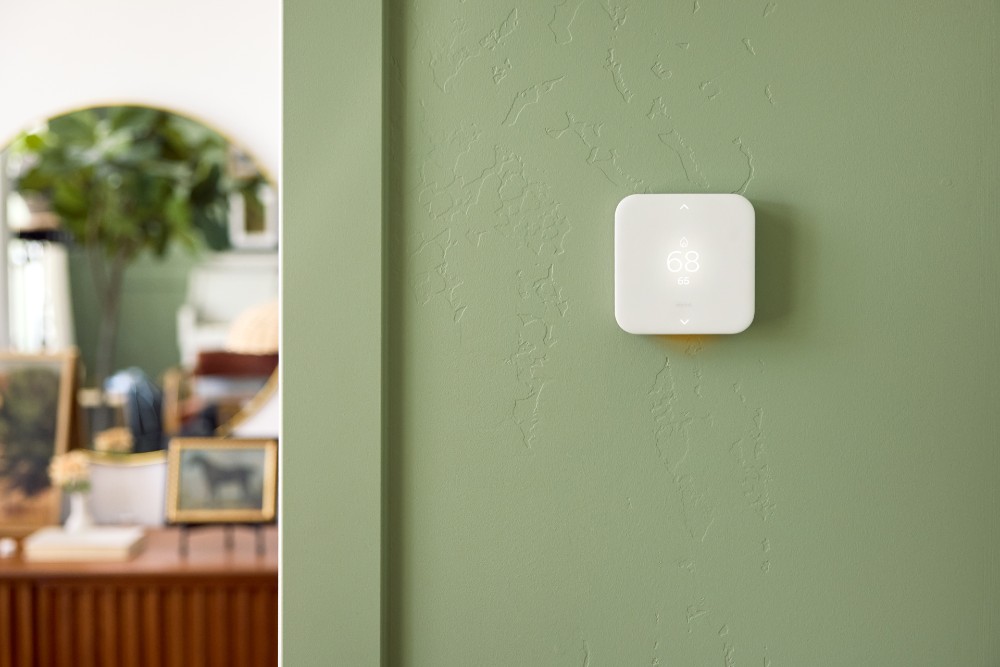
How to choose the best smart thermostat for your home
Finding the best smart thermostat for your home starts with understanding your specific heating and cooling setup, as well as your preferences for features, integration, and price. Not every thermostat is compatible with every system, so it’s important to narrow your options based on what works for your space and lifestyle.
- HVAC compatibility. Before buying, confirm that the thermostat supports your home’s heating and cooling system. Some smart thermostats are designed for central air conditioning, heat pumps, or multi-stage heating systems, while others may only support basic setups. The Vivint Smart Thermostat, for example, works with the most common HVAC systems and is professionally installed to ensure a proper fit.
- Smart home integration. Choose a thermostat that aligns with your current or planned smart home platform. If you’re already using devices from Vivint, selecting the Vivint Smart Thermostat ensures seamless control from a single app alongside other smart home devices like sensors and cameras.
- Budget considerations. Smart thermostats range from basic models with scheduling and remote control to premium options with advanced sensors and voice assistants. While some homeowners may prefer high-end features, others can benefit from simpler, more affordable models—just be sure you’re not sacrificing compatibility or essential functions.
- Rebates & incentives. Many utility companies offer rebates for installing energy-efficient smart thermostats. These programs can help offset the cost of the device and make upgrading even more worthwhile. Check with your local energy provider or visit ENERGY STAR’s website to see what savings might be available in your area.
By considering these key factors, you can confidently choose a smart thermostat that improves comfort, efficiency, and convenience in your home.
Related article
How Much Money a Smart Thermostat Will Actually Save You
DIY vs. professional installation
Installing a smart thermostat can often be a DIY project, especially with models designed for easy setup. However, depending on your home’s wiring and HVAC system, professional installation may be the better—and safer—option.
Installing a smart thermostat yourself
Many smart thermostats come with clear instructions and installation kits. If you’re replacing an existing low-voltage thermostat, installation usually takes less than an hour. Here’s a general overview of the DIY process:
- Turn off the power. Shut off your HVAC system at the breaker.
- Remove your old thermostat. Label the wires using the provided stickers.
- Check for a C-wire. The common wire provides continuous power to your thermostat.
- Install the baseplate. Connect the wires to the labeled terminals and attach the new thermostat unit.
- Restore power. Follow the on-screen or in-app setup to connect the thermostat to Wi-Fi.
You’ll need a screwdriver, a level, and possibly a drill—plus your home Wi-Fi credentials for app pairing. See your specific thermostat model for installation instructions.
When to hire a professional
While many users can handle the installation themselves, there are situations where it’s best to bring in a pro:
- No C-wire is available. Some systems lack a common wire, which many thermostats require. An electrician or HVAC technician can install one or recommend a compatible adapter.
- Complex systems. If your home has multi-stage heating or cooling, a heat pump with auxiliary heat, or multiple zones, installation can get tricky.
- Smart home integration. If you’re installing a thermostat as part of larger smart home systems—especially with platforms like Vivint—professional installation ensures everything works together smoothly.
If you’re unsure about your system or want a worry-free setup, scheduling professional installation is a smart move.
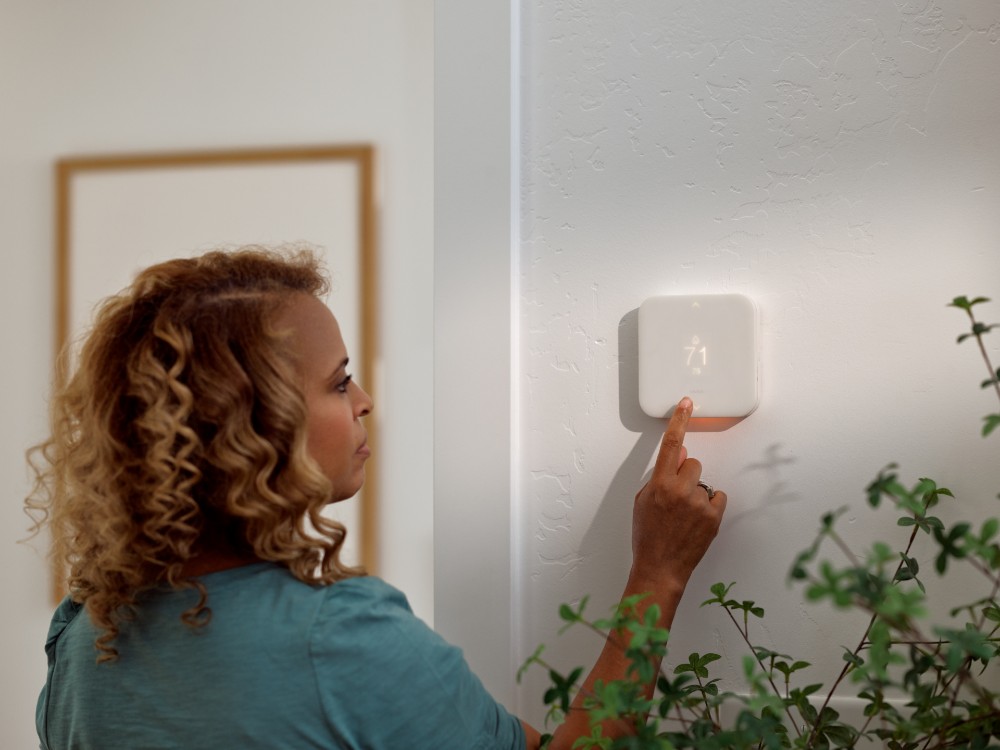
Maximizing energy savings with your smart thermostat
Smart thermostats are designed to do more than just keep your home comfortable—they may also help you save energy and potentially lower utility bills. By taking advantage of features like automation, geofencing, and usage tracking, you can make your home more efficient.
Automation & scheduling
One of the easiest ways to cut energy waste is by setting up daily or weekly schedules. Smart thermostats let you program temperature changes based on your routine — like lowering the heat when you’re asleep or cooling the house just before you return from work. Some models also allow you to create automation rules based on system activity or sensor input, adjusting your thermostat automatically without manual input.
Geofencing & occupancy sensors
Geofencing uses your smartphone’s location to determine when you’re home or away. When you leave a set perimeter, the thermostat can automatically switch to an energy-saving mode. Occupancy sensors provide another layer of control by detecting movement in your home and adjusting temperatures in real time. This ensures you’re not heating or cooling an empty house — helping you save money without sacrificing comfort.
Monitoring energy costs
Most smart thermostats come with companion apps that offer insights into your energy usage. These apps can show you how much you’re spending on heating and cooling, offer personalized tips, and highlight opportunities to reduce energy use. Some models provide eco reports and performance metrics so you can make smarter energy decisions over time.
With the right setup, your smart thermostat becomes more than just a convenience — it’s a powerful tool for potential long-term energy savings.
Related article
What Is a Smart Home?
Upgrade your comfort and save energy
Upgrading to a smart thermostat is one of the simplest ways to make your home more comfortable, energy-efficient, and connected. With features like remote access, voice control, automated scheduling, and real-time energy tracking, today’s smart thermostats help you save money while keeping your home just the way you like it.
Whether you want a fully integrated system like the Vivint Smart Thermostat or a DIY model, the right thermostat depends on your HVAC setup, budget, and smart home ecosystem.
Ready to upgrade? Explore the Vivint Smart Thermostat or discover more Vivint smart home solutions designed to simplify life and protect your home. Give us a call at 855.822.1220 today.
Get a free quote today.
A Vivint Smart Home Pro will contact you within 24 hours. Or skip the form and call now: 844.481.8630.
Everything works together
Combine products
for a safer home
You may also like:
Smart Guides
How Much Does Home Automation Cost? A Complete 2026 Pricing Guide
Mar. 04, 2026

Smart Guides
The In-Depth Guide to Home Security System Costs in 2026
Keeping your home safe doesn’t have to break the bank. Read about costs you can expect when signing up for a security system for your home.
Mar. 03, 2026

Smart Guides
How Package Detection Works—And Why You Need It
Ever wondered how package detection works, or if it’s really effective? Read on to find out how the Vivint Doorbell Camera Pro works to protect your packages around the clock.
Feb. 27, 2026
Related Content
-
Smart Thermostat
Vivint’s Smart Thermostat blends Comfort & Energy Savings into One Device. Connect to your Wifi & Control your Z Wave Thermostat with only your Voice. Call 855.730.0053 to Learn More.
-
Guide to Using Your Thermostat With Google and Other Voice Assistants
Pairing your smart thermostat with a voice assistant can add convenience and safety to your home.
-
Are Smart Thermostats Worth It?
Discover the benefits of smart thermostats for energy savings, convenience, and comfort in your smart home. Are they worth the investment?


