
The Vivint Smart Home app is the best home automation app on the market—and we have the reviews to prove it.
Zigbee vs. Z-Wave: What’s the Difference, and Which Should You Choose?
Key takeaways
- Zigbee and Z-Wave are wireless protocols. They help smart home devices communicate using mesh networks, each with different strengths.
- Zigbee operates at 2.4 GHz. It supports more nodes and is commonly used in smart lighting and small devices.
- Z-Wave runs on a lower frequency (800–900 MHz). This protocol offers better range and reliability for security-focused systems.
- Zigbee 3.0 improved its compatibility. But Z-Wave still offers stronger interoperability across brands.
- Vivint systems support both protocols. You don’t have to choose; your system is designed to handle the details behind the scenes.
Smart home devices don’t just turn on with a tap. They need a way to talk to each other. Two of the most popular “languages” they speak are Zigbee and Z-Wave. These wireless protocols help connect everything from light bulbs and thermostats to motion sensors and door locks, invisibly powering your smart home.
Both Zigbee and Z-Wave are essential in home automation and security systems, but they work in different ways. Each has unique strengths in terms of range, power usage, compatibility, and how well devices interact across various brands. Understanding those differences can help you build a smoother smart home setup.
If you use a professionally installed platform like Vivint, the installer handles most of the technical heavy lifting for you. But knowing how Zigbee devices and Z-Wave devices function, and which protocol best fits your ecosystem, makes expanding or upgrading your system easier and more future-proof.
This guide breaks down the differences between Zigbee and Z-Wave, so you can decide which is right for your smart home.
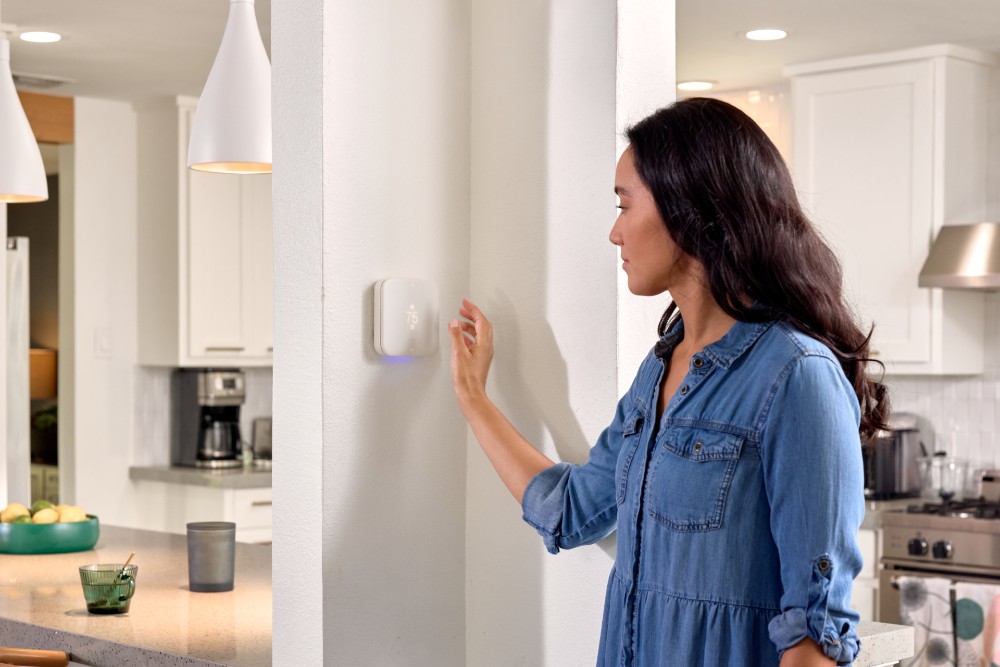
What is Zigbee?
Zigbee is like a language that smart home devices use to talk to each other. Instead of using Wi-Fi or Bluetooth, Zigbee creates its own network, helping devices to stay connected without crowding your internet bandwidth.
Originally developed by the Zigbee Alliance (now the Connectivity Standards Alliance), Zigbee was designed specifically for low-power, low-data communication. With the release of Zigbee 3.0, compatibility across different brands and device types improved significantly, making it easier to build a cohesive smart home system.
Zigbee operates on a mesh network, with each device helping to pass along signals, improving coverage and reliability. Because Zigbee products are low-power and often battery-powered, they’re ideal for energy-efficient smart home devices.
You’ll find Zigbee devices in many common smart home setups. Popular uses include:
- Smart lighting. Products like Philips Hue bulbs use Zigbee to enable remote control, dimming, and scheduling.
- Thermostats. Some smart thermostats support Zigbee for communicating with temperature sensors and automation platforms.
- Home automation sensors. Door/window sensors, motion detectors, and leak sensors often rely on Zigbee to stay efficient and responsive.
Thanks to its wide compatibility and strong network design, Zigbee continues to play a major role in smart home automation.
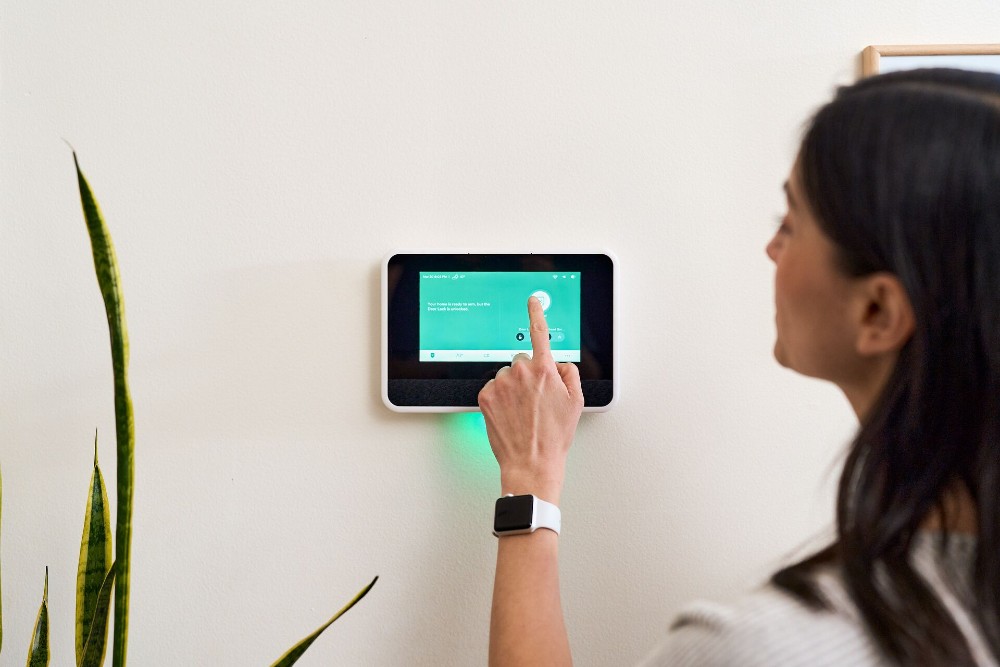
What is Z-Wave?
Z‑Wave is a wireless communication protocol that smart home devices speak. Think of it as a dedicated language for home automation. It’s governed by the Z‑Wave Alliance and owned by Silicon Labs, providing strong technical and industry oversight.
Unlike Zigbee, which runs on the crowded 2.4 GHz band, the Z‑Wave network uses a sub‑1 GHz frequency (typically 800-900 MHz depending on region). This lower frequency allows signals to travel farther and penetrate walls more effectively, reducing interference from nearby Wi‑Fi or Bluetooth devices.
In the smart home world, Z‑Wave stands out for its reliability, especially when managing security devices like door sensors, motion detectors, and smart locks. Many professionally installed systems (including those from Vivint) lean on Z‑Wave because the protocol delivers strong performance across a whole‑home security ecosystem.
Key capabilities of Z-Wave include:
- Mesh network architecture. Devices pass signals across one another, strengthening coverage.
- Long range and low interference. Operating in the sub‑1 GHz band avoids congestion from Wi‑Fi and Bluetooth.
- Security-oriented performance. Well-suited for smart home devices like locks and motion sensors, where battery life and signal reliability are essential.
Z‑Wave is a secure, purpose-built protocol that’s especially useful for full-scale smart home or security system installations.
Some devices that work with Z-Wave include:
If you love the convenience of a smart home, you may want to invest in Z-Wave smart home products.
Related article
What Do Motion Sensors Actually Look Like?
What devices work with Z-Wave?
If you love the convenience of a smart home, you may want to invest in Z-Wave smart home products.
Here are some of the most popular smart devices to consider:
Smart locks
Smart locks can be installed on your door to allow you to lock and unlock your house through your mobile phone or the smart lock’s keypad.
Apart from providing convenient, keyless entry to your home, the Vivint Smart Lock connects to your existing smart home setup to perform more advanced actions. You can control your locks with voice commands or send real-time notifications.
Smart lighting
Thanks to Z-Wave technology, controlling the lights with your mobile phone is easy.
With smart lighting—like Philips Hue smart light bulbs and Vivint Smart Plugs—you can turn the lights on or off, dim or brighten them, change the colors based on your mood, or even control your lights with voice control.
Just say “Hey Siri, switch on the lights,” and see what happens!
Smart thermostat
Smart thermostats like the Vivint Smart Thermostat allow you to control the temperature of your home from anywhere, making your life simpler and more convenient.
With a smart thermostat, you can program your device to heat and cool at particular hours. You can adjust the temperature while you’re away, and even track your energy usage to save money on heating and cooling bills.
Over time, your smart thermostat learns your preferences and automatically makes adjustments to bring your home to the right temperature — whether it’s summer or winter.
Smart speakers
Apart from playing your favorite songs on command, smart speakers have many other uses.
For instance, you can ask your virtual assistant what the weather will be like tomorrow, set alarms for the next day, or lock your doors while washing the dishes.
To make all this happen, just pair your smart speakers with voice assistants like Google Assistant.
Smart home hub
Think of a smart hub as the heart of your house — it connects all smart devices to create the right home automation experience.
Through the Vivint Smart Hub, you can control your door locks, view real-time camera footage of your home, and adjust the temperature — all through a single control panel.
The Vivint Smart Hub was designed with ease of access in mind. Even children and aging parents will probably find it easy to get the hang of, and that gives you peace of mind when you’re not at home.
Zigbee vs. Z-Wave: key differences
Zigbee and Z-Wave are two of the most widely used wireless protocols in smart homes, but they operate differently. Think of them as competing operating systems for your devices. While both power a wide variety of smart home devices, they differ in frequency bands, device compatibility, and the way they connect to a smart home hub.
Each uses a mesh network, where devices, or nodes, relay signals across the system. But Zigbee and Z-Wave vary in how far those signals travel, how many devices they support, and how likely they are to experience interference. Depending on your setup, you may need a Z-Wave controller or Zigbee-compatible dongle to connect them to your home automation system.
To make comparison simple, here’s a side-by-side breakdown of key features:
| Zigbee vs. Z-Wave at a Glance | ||
|---|---|---|
| Feature | Zigbee | Z-Wave |
| Frequency | 2.4 GHz (global) | 800-900 MHz (region-specific) |
| Range | ~30 ft per device | ~200 ft per device |
| Mesh capacity | Over 65,000 nodes | Up to 232 nodes |
| Power use | Lower power consumption | Slightly higher, more efficient range |
| Device compatibility | Varies by manufacturer; improved with Zigbee 3.0 | Strong cross-brand interoperability |
| Encryption | AES-128 | AES-128 |
| Best for | Smart lighting; small devices | Security systems; home coverage |
Both options offer strong functionality and compatibility across different smart home devices—but your choice may depend on the number of devices you plan to use, the size of your home, and the brands in your ecosystem. Zigbee is well-suited for lighting setups like Philips Hue, while Z-Wave powers devices that require long-range reliability, including door sensors and smart locks.
Just make sure your smart home hub supports the protocol you choose—or that you're using compatible hardware to bridge them. Most systems today, including Vivint, support multiple protocols to keep your network flexible and future-ready.
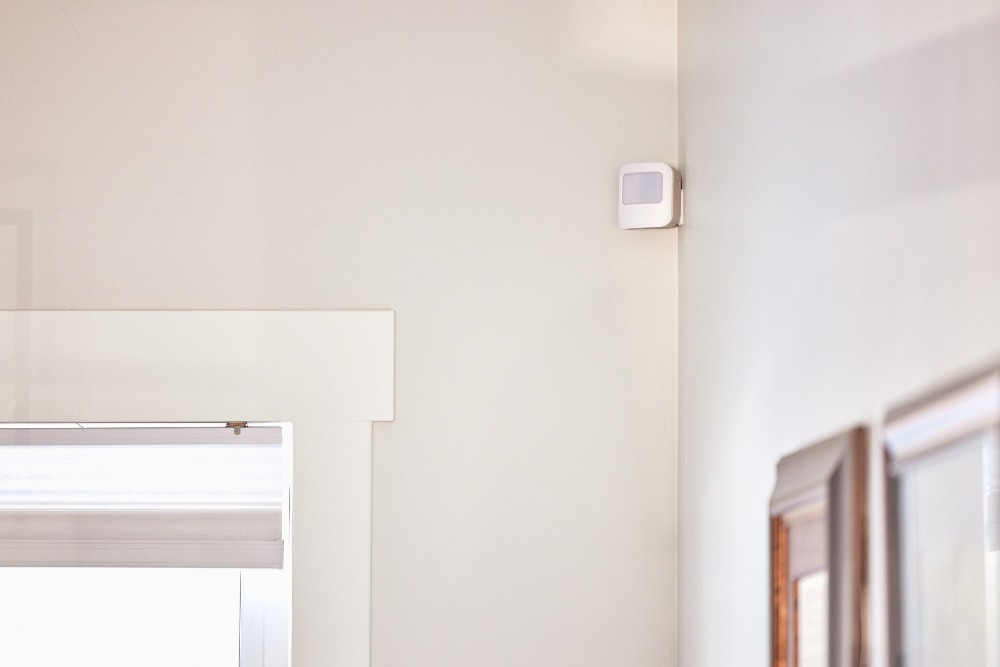
Zigbee pros and cons
Zigbee has earned its place in many smart home ecosystems thanks to its energy efficiency and wide device support. But like any protocol, it comes with trade-offs worth considering.
Pros
Zigbee pros include:
- Lower power consumption. Zigbee’s low-power design makes it well-suited for battery-powered smart home devices such as sensors and smart controllers.
- Widely supported in lighting devices. Many smart lighting systems rely on Zigbee because it supports large device counts and flexible mesh topologies.
- Open standard maintained by the Zigbee Alliance. Now called the Connectivity Standards Alliance, this group promotes interoperability and innovation across various brands and product lines.
- Operates on a mesh network. Each Zigbee device can act as a repeater, helping expand coverage and improve network reliability, especially in larger homes.
- Supports a wide range of devices. Zigbee is commonly used in lighting, thermostats, and automation sensors, offering flexibility within smart home ecosystems.
Cons
However, Zigbee also comes with trade-offs, particularly in signal strength and cross-brand reliability.
- Higher interference risk. Zigbee often uses the 2.4 GHz band, where interference from Wi-Fi and Bluetooth devices can degrade signals and cause reliability issues.
- Shorter range. Because it uses higher-frequency bands and optimizes for low power, this protocol offers a shorter individual device range than lower-frequency alternatives.
- Less consistent compatibility. Despite improvements (such as Zigbee 3.0), inconsistencies remain across brands and devices, which can affect smooth integration.
Zigbee delivers strong power efficiency and powers many smart lighting and home automation systems. While it may struggle with interference and range in some setups, its open standard and large device ecosystem make it a strong option for users prioritizing flexibility and energy-conscious design.
Related article
Smart Plug Basics
Z-Wave pros and cons
Z-Wave is known for its long-range performance and strong reliability in security setups. Still, it’s important to weigh its limitations alongside its strengths.
Pros
Z–Wave’s pros include:
- Long range. Z-wave’s sub-1 GHz frequency allows for better wall penetration and overall range, which is advantageous in home security setups that include door sensors and motion detectors.
- Low interference. Because it uses less congested radio bands, it often avoids the interference common in 2.4 GHz environments, including wi-fi and Bluetooth congestion.
- Strong device interoperability. The tighter certification process for Z-wave devices supports cross-brand compatibility and reliable performance across smart locks, thermostats, and smart plugs.
- Reliable Z-Wave network. Devices operate on a mesh network that supports robust signal transmission even across large homes.
- Z-Wave controller support. Most smart home hubs include built-in Z-Wave controllers or support compatible dongles, making integration straightforward.
Cons
Still, Z‑Wave isn’t perfect. It has limitations in product variety and may use more power in some scenarios. While robust, Z-Wave has fewer vendors and products compared with some open-standard alternatives, which may limit device variety.
In some implementations, Z-Wave devices may consume more power than ultra-low-power alternatives like Zigbee, mainly when operating in repeater roles. Z-Wave offers strong reliability, long-range communication, and seamless device compatibility—making it a dependable choice for whole-home security systems.
Although its ecosystem is smaller, its performance and interoperability often outweigh that limitation for many smart home users. Backed by the Z-Wave Alliance and Silicon Labs, the protocol continues to evolve as a cornerstone of secure home automation.

Range, frequency, and interference
Zigbee and Z-Wave both use a mesh network to connect smart home devices. In a mesh system, each device or node relays signals to others, helping your network cover a larger area and stay connected even if one device goes offline. But while the structure is similar, the way each protocol handles range, frequency, and interference is very different.
Zigbee: shorter range, more interference risk
Zigbee works well in dense networks, but its higher-frequency design makes it more sensitive to signal traffic from nearby devices.
- Operates at 2.4 GHz. Zigbee uses the same frequency band as many Wi-Fi networks, Bluetooth devices, and other smart home products. This makes it prone to signal congestion, especially in tech-heavy households.
- Requires more repeaters. Zigbee devices typically reach about 30 feet indoors, so you may need more nodes to extend coverage in larger homes.
- Higher node capacity. The Zigbee network supports over 65,000 nodes, which is great for densely connected environments, but you'll rely more on nearby devices to relay the signal.
- More overlap with home networks. Because it shares the 2.4 GHz band, interference from routers and other Wi-Fi devices is more likely.
Z-Wave: longer range, less interference
Z-Wave’s lower-frequency approach gives it a stronger reach and more stable performance, especially in homes with many wireless signals.
- Operates at 800–900 MHz. The Z-Wave network runs on a lower-frequency band that’s far less crowded. This reduces conflicts with Wi-Fi and Bluetooth, helping maintain a clean connection.
- Stronger wall penetration. Lower frequencies travel farther and pass through barriers more effectively, improving communication between rooms or floors.
- Covers more ground with fewer devices. Z-Wave’s range is up to 100 feet indoors, so that you can build a network with fewer repeaters.
- Lower node limit, but sufficient. It supports up to 232 nodes, fewer than Zigbee, but still more than enough for most smart home setups.
Zigbee vs. Z-Wave: which fits your space?
If you’re connecting dozens of smart home devices in a small to mid-sized space, Zigbee may offer the flexibility you need—just be mindful of nearby Wi-Fi networks and signal traffic. If you’re building a whole-home system with a smart home hub and want reliable performance across larger areas with fewer devices, Z-Wave is often the better fit.
Related article
Smart Home Trends
Power consumption and battery life
Zigbee and Z-Wave are both built for low-power performance, which is essential for battery-powered smart home devices like door sensors, motion detectors, and smart plugs. But how they manage power consumption in real-world conditions varies depending on your setup.
Zigbee: efficient for small devices and short-range setups
Zigbee is known for its energy efficiency, especially in smaller, densely connected environments.
- Lower power consumption. Zigbee is highly energy-efficient, making it a good fit for devices that send infrequent signals.
- Good for battery-powered sensors. It’s commonly used in motion sensors, door sensors, and other low-data smart home devices.
- Shorter range means more relays. As noted earlier, Zigbee has a limited range, which may require more devices to maintain coverage—slightly increasing power demands in large homes.
- Potentially shorter battery life. Many Zigbee sensors last six to 12 months, depending on how often they transmit.
Z-Wave: longer runtime in security-focused systems
Installers often choose Z-Wave for larger smart home setups where signal range and battery life are important.
- Efficient for wider coverage. Z-Wave’s longer range means fewer devices are needed to span large areas, which can reduce relay-related energy use.
- Reliable in smart home security. It’s widely used in Z-Wave motion detectors, door sensors, and other battery-powered security devices.
- Slightly longer battery life. Z-Wave sensors often run 12-24 months on a standard lithium battery.
Zigbee vs. Z-Wave: what lasts longer?
For dense device networks or small spaces, Zigbee’s low power draw is a win. But in larger homes, Z-Wave’s efficient routing and range can help extend battery life—especially in smart home security setups, where reliability matters most.

Device compatibility and ecosystem
A smart home setup is only as strong as the devices it can support—and both Zigbee and Z-Wave have made strides in interoperability across different brands.
Zigbee: better with version 3.0
Earlier versions of Zigbee sometimes struggled with compatibility across manufacturers. But Zigbee 3.0, released by the Zigbee Alliance, unified various device profiles into a single, open standard, making it easier for products from different brands to work together. Still, compatibility can vary based on how well each device supports the shared standard.
Z-Wave: stricter compliance, stronger compatibility
Devices using Z-Wave must meet certification requirements set by the Z-Wave Alliance. This tighter control ensures that Z-Wave devices from different manufacturers reliably communicate, which is why it’s widely used in professionally installed smart home systems.
A smart home hub is required for both
Both Zigbee and Z-Wave need a smart home hub to coordinate devices. Whether you’re using Vivint, SmartThings, or another ecosystem, the hub acts as a translator between your connected products.
Works with SmartThings, and Home Assistant
Most Zigbee and Z-Wave hubs integrate with major platforms, such as SmartThings and Home Assistant, giving users the flexibility to control devices by voice or through centralized apps.
Related article
Smart Locks for Home
Security and encryption
Both Zigbee and Z‑Wave use AES‑128 encryption to secure device communications in smart home systems. AES‑128 is a standard approved by the National Institute of Standards and Technology (NIST) and widely trusted across security‑sensitive applications.
Zigbee security
Zigbee frames are encrypted at the network layer using AES-128 (also known as AES-128-CCM*), which authenticates and protects payloads from tampering or eavesdropping. The Zigbee Alliance governs the protocol and relies on standardized security mechanisms built into devices.
Z‑Wave certification and security
Z‑Wave also uses AES‑128 encryption and has a more rigorous certification scheme overseen by the Z-Wave Alliance. Devices must pass both technical and market certifications before claiming compliance. This stricter process helps ensure better device interoperability and consistent security across the ecosystem.
What this means for your smart home
For most homeowners, both Zigbee and Z‑Wave offer sufficient encryption and security for everyday use. If you’re building a security‑heavy system with door locks, motion sensors, and other critical devices, Z‑Wave’s stricter certification can provide added assurance—but Zigbee’s open standard and AES‑128 protection still deliver strong performance. Compatibilities with platforms like SmartThings and Home Assistant remain unaffected by the underlying encryption protocol.
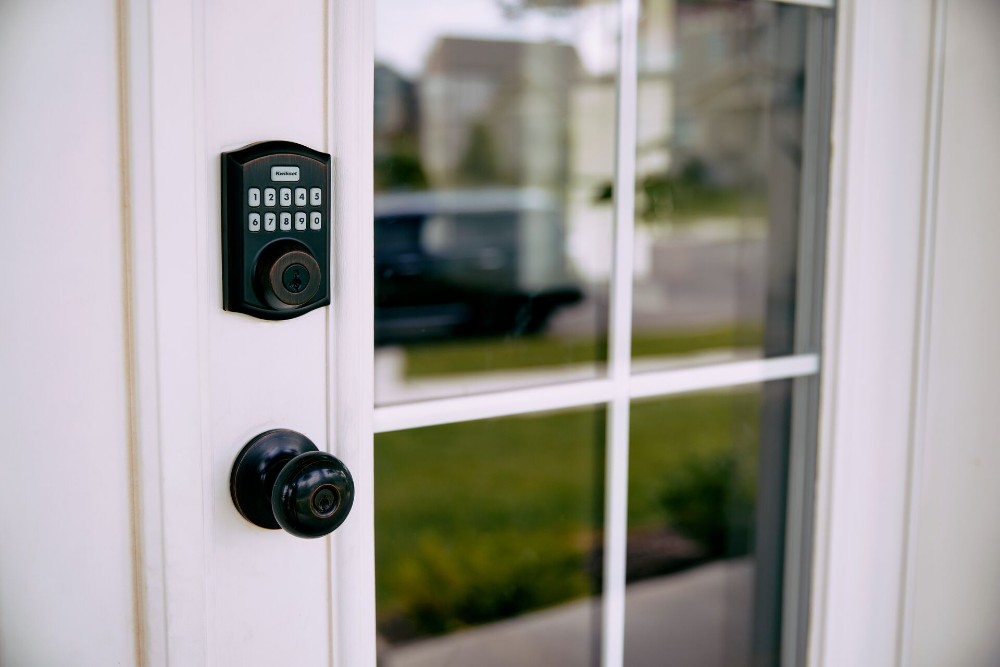
Real-world uses: which protocol for what?
When choosing between Zigbee and Z‑Wave, it helps to consider how they’re used in real-life smart home devices.
Zigbee devices: Ideal for smart lighting and small devices
Zigbee works well for setups focused on smart lighting—think light switches, light bulbs, or smart plugs in multiple rooms. For example, Philips Hue confirms that its smart lights use the Zigbee protocol. Because Zigbee networks support large numbers of nodes and low-power devices, they are well-suited for homes with numerous lighting and automation devices.
Z‑Wave devices: Better for security‑focused devices
Z‑Wave is more common in devices like smart locks, door sensors, and motion sensors, where reliability and range matter. For example, Yale offers a line of smart locks built on Z‑Wave. Because Z‑Wave tends to have better wall‑penetration and fewer interference issues, it’s often the preferred choice for whole‑home security setups.
Zigbee vs Z‑Wave: A system built to support both
Many professionally installed systems, including those from Vivint, support both Zigbee and Z‑Wave, which gives you maximum compatibility and flexibility. That means you can use Zigbee for lighting and small sensors, and Z‑Wave for security‑critical devices, all managed through the same smart home hub.
Related article
Smart Home Lighting Guide
What about Thread, Matter, and the future?
Emerging standards like Matter and Thread are redefining how smart home devices communicate, aiming for broader compatibility, simpler setup, and future-proof functionality. These open‑source‑friendly protocols build on the foundation of legacy systems like Zigbee and Z‑Wave, but move toward a cohesive ecosystem rather than isolated protocols.
What is Matter?
The Matter standard, created by the Connectivity Standards Alliance, is an open standard for smart home devices. It uses Internet Protocol (IP) to enable different brands and platforms to work together seamlessly. Matter’s goal: “connect and build reliable… IoT ecosystems” across smart lighting, locks, sensors, and more. Because Matter supports Wi‑Fi, Ethernet, and mesh technologies like Thread, it adds a powerful layer of future‑proofing for smart home devices.
What is Thread, and how does it fit?
Thread is a low‑power, mesh‑based networking protocol built on 802.15.4 radio technology. It complements Matter by providing a stable transport layer for battery-powered smart home devices with lower latency and fewer failure points.
Because Thread requires less infrastructure and supports IP-based communication, it either supplements or replaces older protocols, such as Zigbee and Z-Wave, in many next-gen smart home ecosystems.
How this impacts your smart home setup
Systems like those from Vivint are being designed with these newer standards in mind, so your smart home is more compatible with both current devices and future releases. As Matter expands and Thread adoption increases, you’ll benefit from broader device compatibility, cross‑brand functionality, and smoother firmware updates. That means fewer dead ends when adding new smart home devices or switching ecosystems.

Which protocol is right for you?
Choosing between Zigbee and Z-Wave depends on your smart home setup, the types of devices you have, and the amount of space you need to cover. If you’re primarily adding smart lights, switches, or small accessories in a compact home, Zigbee devices offer flexible connectivity and a broad ecosystem. But if your setup includes smart locks, door sensors, or you want a home automation system that spans multiple rooms or floors, Z‑Wave devices may deliver more reliable range and performance.
Both protocols offer strong compatibility, mesh networking, and low‑power communication — and modern systems often support both. That includes Vivint. Our professionally installed security systems are designed to handle the technical details for you. Whether you’re adding a new smart plug or expanding your ecosystem with more devices, Vivint ensures your smart home devices connect seamlessly, with no guesswork on your end.
Give us a call at 855.822.1220 to get started on your system toiday.
FAQs
Does Z-Wave work without Wi-Fi?
Basic Z-Wave networks, such as bulbs or plug-in modules, don’t need an internet connection to function. However, your smart devices won’t be able to communicate with each other without being connected to the internet.
When you’ve made an internet connection, you’ll be able to control your smart home system from your phone, laptop, or tablet, regardless of your location.
To make this happen, make sure your smart devices are compatible with smart integrations and voice assistants, such as Google Nest, Apple HomeKit, Google Home, and Google Assistant.
Is Z-Wave compatible with iOS and Android devices?
Z-Wave is a wireless home automation technology that can be used on both iOS and Android devices.
If you want to get the most out of your Z-Wave device, you can connect it with integrations and voice assistants, such as Google Home and Apple HomeKit.
Does Zigbee work without Wi-Fi?
Yes, Zigbee devices can work without connection to the internet. Some users find Zigbee to be superior to Wi-Fi due to its low energy consumption and independence from the internet.
Get a free quote today.
A Vivint Smart Home Pro will contact you within 24 hours. Or skip the form and call now: 844.481.8630.
Everything works together
Combine products
for a safer home
You may also like:
Smart Home
Vivint App Reviews (2026)
Oct. 15, 2026

Smart Home
Smart Home for Detached Structures: Securing Sheds, Workshops, Barns & Outbuildings
Your security stops at the back door. Here's how to secure every detached structure on your property, from sheds to barns.
Oct. 08, 2026

Smart Home
Smart Door Lock vs. Traditional: Which Offers Better Security for Your Home?
Smart door lock vs. traditional lock: compare cost, security features, remote access, and key control to choose the best lock for your home.
Sep. 11, 2026
Related Content
-
Smart Thermostat
Vivint’s Smart Thermostat blends Comfort & Energy Savings into One Device. Connect to your Wifi & Control your Z Wave Thermostat with only your Voice. Call 855.730.0053 to Learn More.
-
Vivint Smart Plug & Outlets
Vivint’s Smart Plug allows you to connect lamps and smart appliances. Call (855) 234-7614 to Learn More about this Smart Lighting device.
-
Vivint Doorbell Chime Extender
Vivint's Chime Extender is a doorbell extender that allows you to hear every chime and system alert throughout your home. Call (855) 758-0045 to Learn More.


